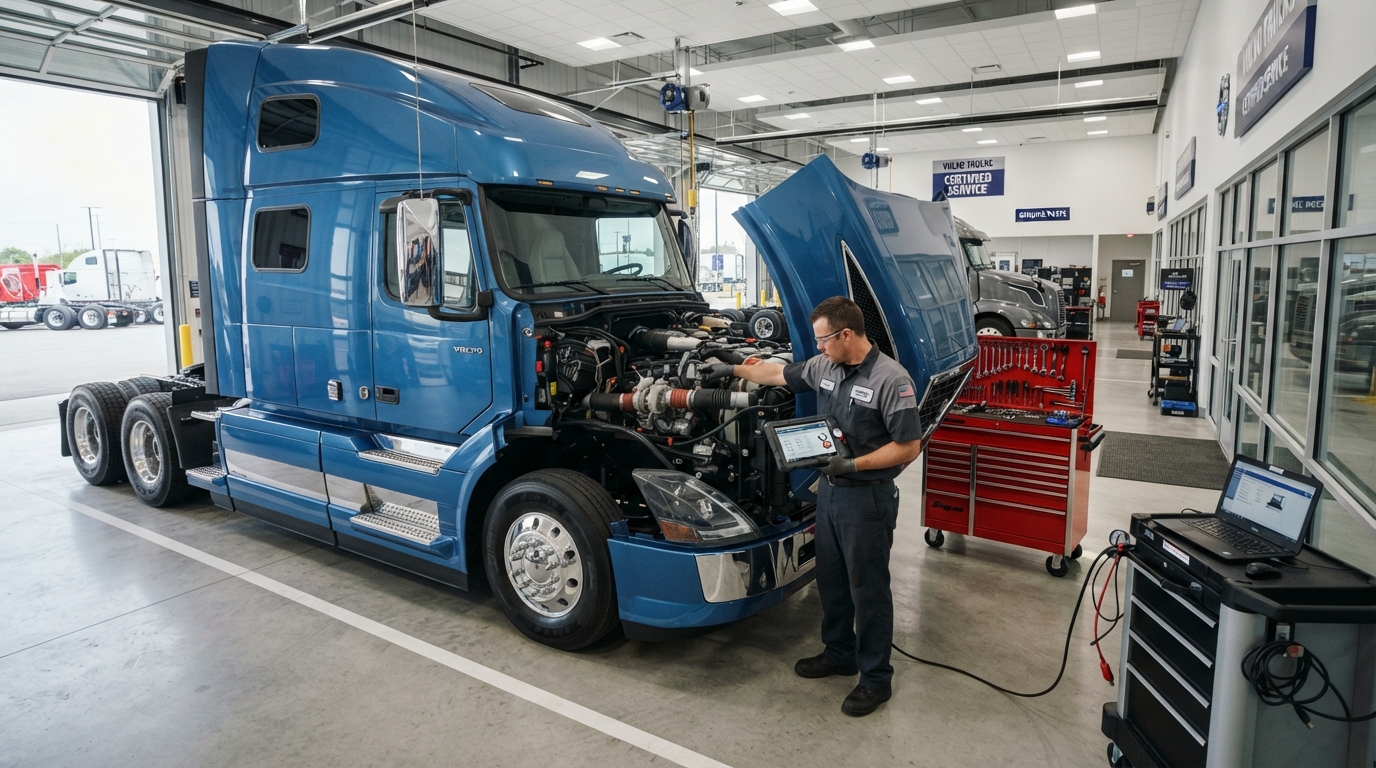
There may be towing expenses, lost revenue, downtime, rental costs, and the unexpected expense of repairing increasingly sophisticated mechanical and electronic systems. That's one reason commercial truck Vehicle Service Contracts have become an important F&I product for commercial truck dealerships. But not every VSC provides the same protection.
What Is a Vehicle Service Contract?
A Vehicle Service Contract, commonly called a VSC, is an agreement that provides benefits for eligible repairs to covered vehicle components according to the contract's terms.
Although people sometimes refer to VSCs as "extended warranties," a VSC is not necessarily the same thing as a manufacturer's warranty.
Coverage, eligibility, deductibles, terms, mileage limits, exclusions, and claims procedures vary by program.
For commercial truck buyers, the key question isn't simply:
"Does this truck have a VSC?"
It's:
"What does this particular VSC actually cover?"
Powertrain vs. Exclusionary Coverage
One of the biggest differences between VSC options is the scope of covered components.
Powertrain or Stated-Component Coverage
A powertrain-oriented contract generally identifies specific components or systems that are eligible for coverage.
Depending on the contract, this may include major components associated with areas such as:
The contract defines what is covered. If a component isn't included in the covered-component language, it may not be eligible.
Exclusionary Coverage
Exclusionary coverage approaches the contract differently. Rather than listing only the components that are covered, an exclusionary contract generally provides broader coverage for eligible vehicle components except those specifically excluded by the agreement.
This can make exclusionary coverage attractive to customers seeking broader protection.
However, "exclusionary" does not mean that everything is covered. Every contract still has exclusions, limitations, maintenance requirements, eligibility provisions, and claims procedures.
Why VSCs Can Be Particularly Important on Commercial Trucks
Repair costs on modern commercial trucks can be significant. Today's trucks may incorporate sophisticated:
A major unexpected repair can create a substantial cash-flow problem for a trucking business. A VSC can help turn certain unexpected covered repair costs into a more predictable expense established when the truck is purchased.
The Cost of Downtime
For a commercial customer, the repair itself may only be part of the financial problem. If a truck is in the shop, it isn't generating revenue.
Depending on the business, downtime can mean:
Some commercial VSC programs may offer optional benefits associated with downtime, rental expenses, towing, or roadside assistance. Dealers should understand exactly which benefits are included and which are optional.
Deductibles Matter
Just like other protection products, VSCs may include a deductible. Depending on the program, customers may have different deductible options, potentially including a $0 deductible.
A lower deductible can reduce the customer's out-of-pocket cost when an eligible repair occurs, but it may also affect the initial price of the contract. Dealers should explain available options rather than focusing solely on the monthly payment impact.
Mileage and Vehicle Age Eligibility
Commercial truck VSC eligibility can vary significantly. Some programs are designed primarily for newer trucks, while others can accommodate higher-mileage vehicles.
This becomes particularly important for used Class 8 truck dealers. Before presenting a VSC, dealerships should understand:
Having clear eligibility guidelines prevents the F&I department from presenting a product that cannot ultimately be issued.
Labor Rates Can Matter
Commercial repair labor is expensive, and labor rates vary considerably between repair facilities. Dealers evaluating VSC programs should understand how eligible labor charges are handled.
Questions worth asking include:
A VSC's value isn't determined only by which components appear in the coverage section. Claims procedures and reimbursement provisions matter too.
Maintenance Still Matters
Purchasing a VSC does not eliminate the customer's responsibility to properly maintain the truck. Contracts commonly require customers to follow specified maintenance requirements.
Failure to properly maintain the vehicle can affect eligibility for certain repairs. Dealers should make this clear during the sale.
A customer should leave the dealership understanding both the protection they've purchased and their responsibilities under the contract.
Why Dealers Offer VSCs
For dealerships, VSCs can provide several potential benefits. They can create additional F&I gross profit on vehicles the dealership is already selling.
They can also strengthen the dealership's relationship with the customer after the sale. When the dealership has a service operation, a VSC may help bring eligible repair work back into the service department, depending on the program and claims process.
Most importantly, it gives the customer an opportunity to protect against certain unexpected repair expenses.
The Right Way to Present a VSC
A VSC presentation shouldn't begin with fear. Instead, start with the customer's business.
Ask:
"If this truck experiences a major covered mechanical failure six months from now, how would an unexpected repair affect your operation?"
For a large fleet, that answer may be very different than it is for an owner-operator with one truck. The customer can then decide whether transferring some of that potential repair exposure through a VSC makes financial sense.
Questions Dealers Should Ask When Evaluating a VSC Provider
Dealers considering a VSC program should evaluate more than the dealer cost. Ask:
The answers help determine whether the program fits the dealership's customer base.
Commercial Truck VSC Programs Through TrueGuard
TrueGuard Insurance works with commercial truck dealerships to provide access to dealer F&I programs and Vehicle Service Contract programs designed for commercial vehicles. Available options may include different levels of protection, terms, deductibles, and optional benefits depending on vehicle eligibility and program guidelines.
TrueGuard can also help dealerships develop an F&I process for consistently presenting VSCs alongside other available protection products.
If your dealership is interested in offering commercial truck Vehicle Service Contracts or evaluating your current VSC program, contact TrueGuard Insurance to discuss available options.
Vehicle Service Contracts are subject to eligibility requirements, contract terms, conditions, limitations, exclusions, maintenance requirements, and availability. Specific benefits vary by program.