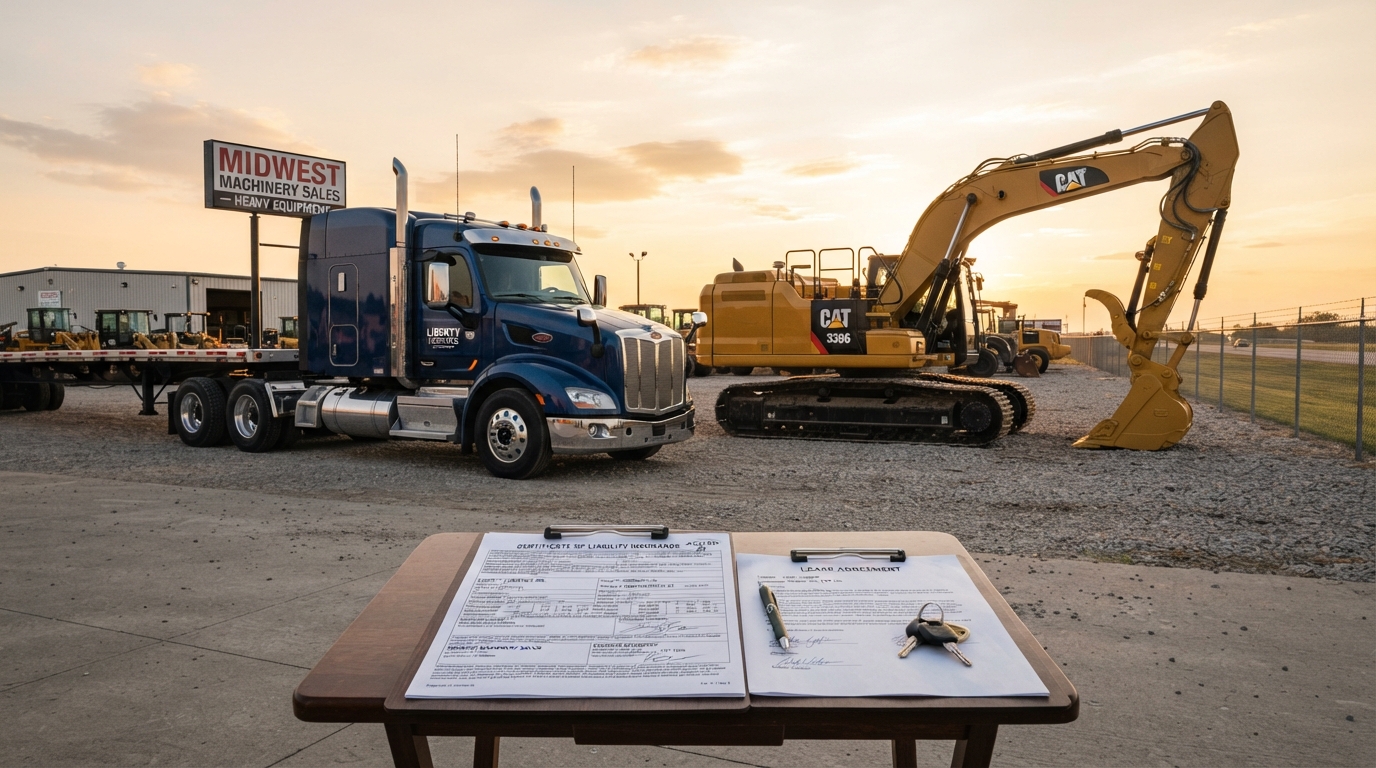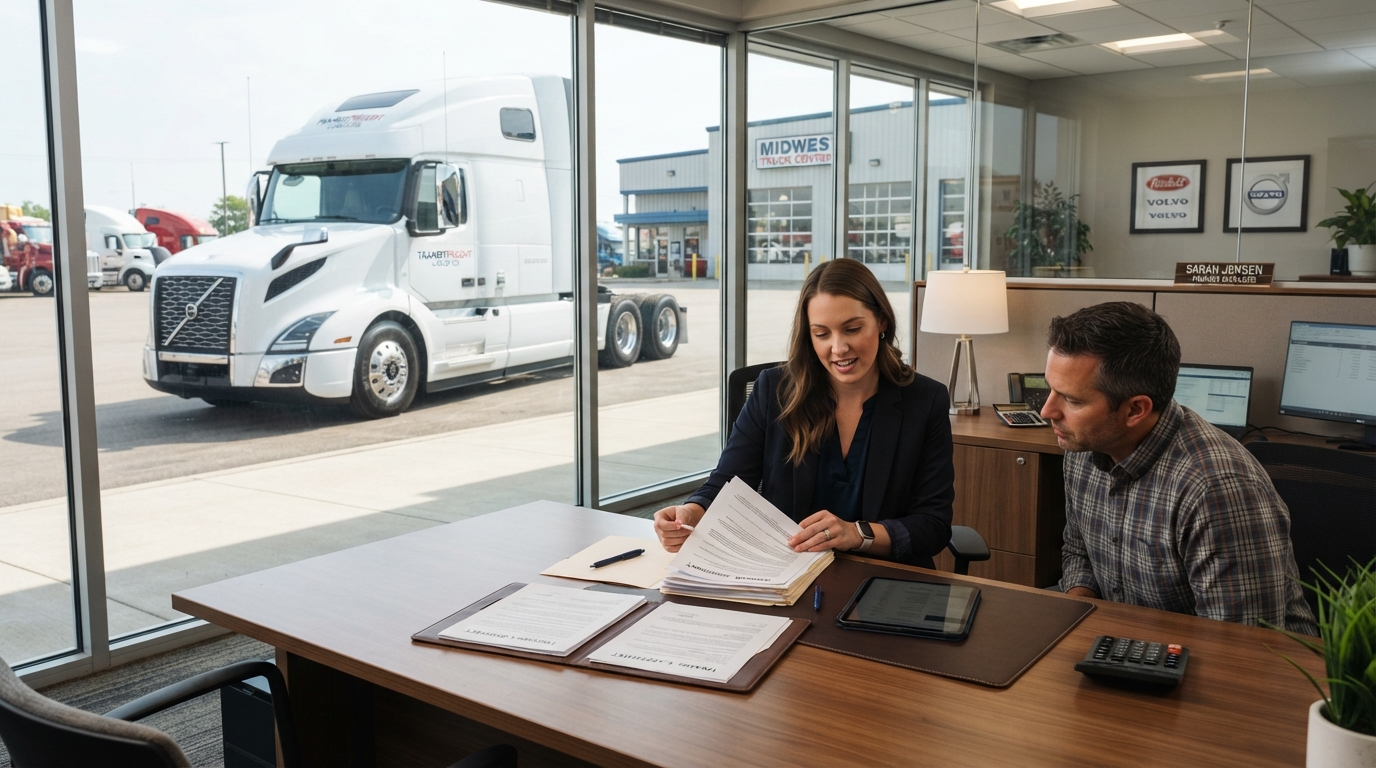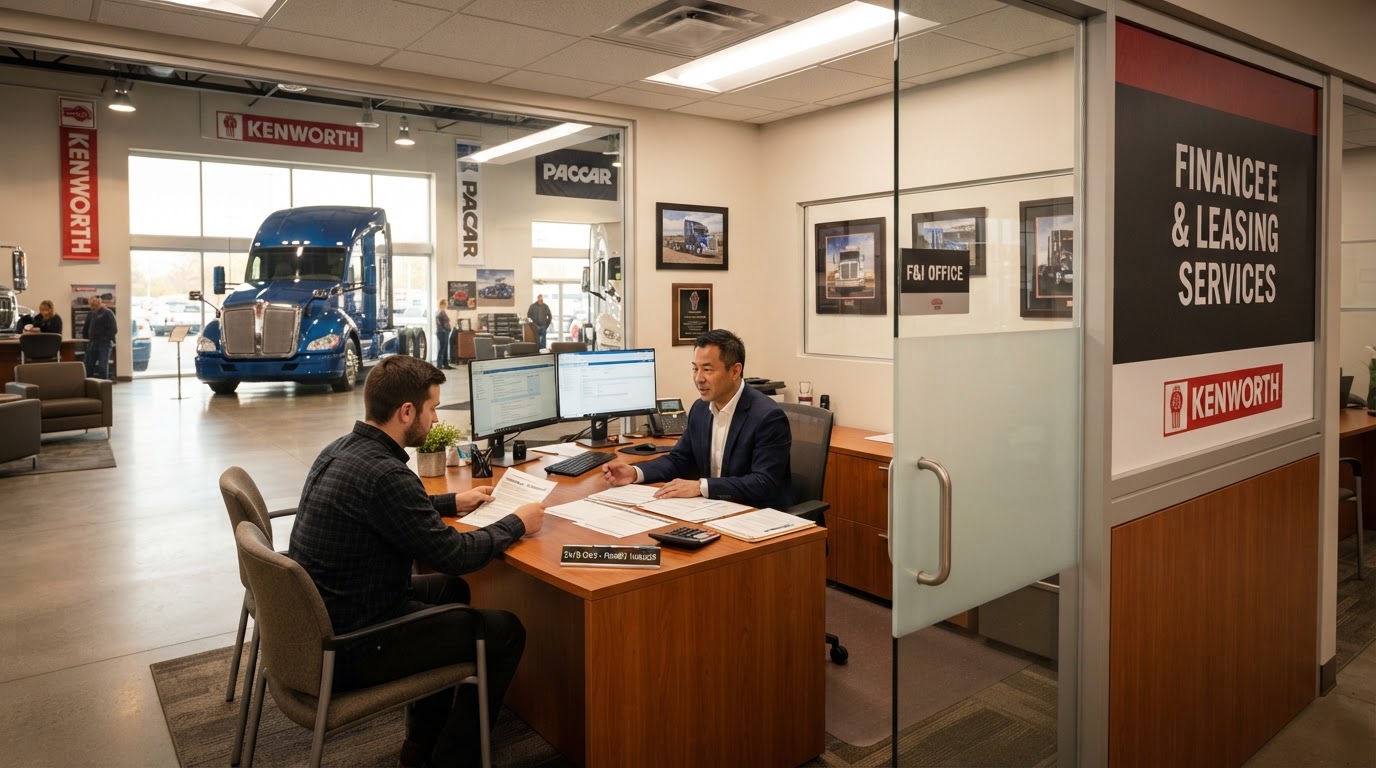
For commercial truck and equipment dealers, ancillary F&I products can include Vehicle Service Contracts (VSCs), GAP protection, Tire & Wheel protection, Theft Protection, Appearance Protection, and other optional products.
When offered appropriately, these products can benefit both the customer and the dealership.
What Are Dealer F&I Products?
F&I stands for Finance and Insurance.
In a dealership, the F&I process typically takes place after the customer has agreed to purchase a vehicle or piece of equipment and may include arranging financing, completing required paperwork, and offering optional protection products.
Ancillary F&I products are designed to address specific risks that aren't necessarily covered by the manufacturer's warranty, commercial auto insurance, or the financing agreement itself.
Rather than viewing F&I as simply another step in the paperwork process, dealers can treat it as an opportunity to educate customers about potential financial exposures associated with owning and operating commercial vehicles.
Vehicle Service Contracts
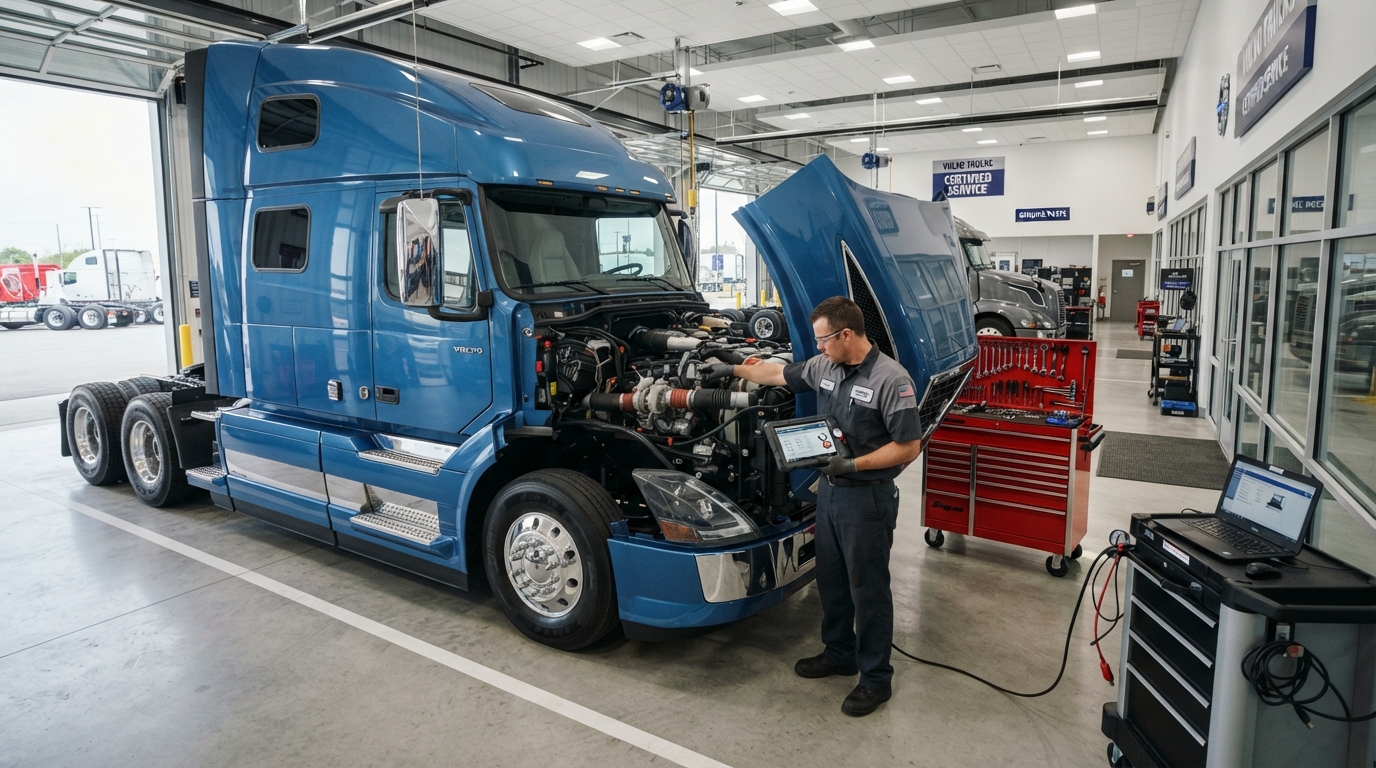
A major mechanical failure on a commercial truck can be expensive.
A commercial truck Vehicle Service Contract, or VSC, can help protect against covered mechanical and electrical repair costs after the applicable manufacturer's warranty expires or as otherwise provided by the contract.
Depending on the program, coverage may range from protection for specified major components to more comprehensive exclusionary coverage.
For a commercial customer, the potential value goes beyond the repair bill. When a revenue-producing truck is out of service, the business may face:
Optional benefits available under some VSC programs may help address certain expenses associated with a covered breakdown.
For dealers, a VSC can also create an additional source of gross profit while helping customers plan for unexpected repair costs.
Commercial GAP Protection
Commercial GAP protection — commercial vehicles can depreciate faster than a loan balance declines.
If a financed vehicle becomes a total loss, the customer's primary physical damage insurance generally pays based on the covered vehicle's value according to the terms of the insurance policy — not necessarily the remaining balance owed to the lender.
That can create a financial gap.
For example, suppose a business still owes $140,000 on a truck when it experiences a covered total loss, but the applicable primary insurance settlement is only $120,000.
That leaves a potential $20,000 difference.
A properly structured commercial GAP product can help address eligible differences between the applicable loan payoff and primary insurance settlement, subject to the GAP agreement's terms and limits.
For customers financing expensive commercial vehicles, understanding that exposure can be an important part of the purchase conversation.
Tire & Wheel Protection
Commercial tires and wheels aren't inexpensive.
Road hazards can result in tire or wheel damage that may not be covered by a manufacturer's warranty. Tire & Wheel protection may provide benefits for eligible damage caused by covered road hazards, depending on the contract.
This can be particularly relevant for commercial vehicles that accumulate significant mileage or routinely operate in environments where road hazards are common. It also gives dealers another relatively easy-to-understand product to present during the F&I conversation.
Theft Protection
Commercial trucks and equipment can represent significant investments, making theft prevention and recovery an important consideration.
Theft Protection products vary by provider but may include theft-deterrent features, identification technology, recovery assistance, or financial benefits associated with a covered theft. The exact benefits depend on the product offered.
For dealers, Theft Protection can complement the broader discussion about protecting a high-value commercial asset after it leaves the dealership.
Appearance Protection
Commercial vehicles are working assets, but appearance can still affect their value.
Appearance Protection products may provide benefits for certain types of interior or exterior damage, depending on the contract. For customers purchasing expensive trucks — particularly owner-operators and businesses that take pride in their fleet — appearance protection can be another relevant option.
Why F&I Matters to Dealer Profitability
Consider what happens when a dealership sells a vehicle but offers no ancillary products. The dealership earns the margin associated with the vehicle transaction and potentially financing.
Now consider the same transaction with an effective F&I presentation. The customer may choose:
Not every customer will purchase every product — nor should they. But even modest product penetration can create meaningful incremental gross profit across a dealership's annual sales volume.
For example, a dealership delivering 40 vehicles per month completes approximately 480 transactions per year.
If an improved F&I process produces even $500 in additional average gross profit per transaction, that represents:
480 transactions × $500 = $240,000 in potential additional annual gross profit.
At $1,000 in additional average gross per transaction, the same sales volume represents:
480 × $1,000 = $480,000.
The point isn't that every dealership will achieve those figures. Actual results depend on volume, product pricing, penetration, cancellations, compensation structures, and other factors. The point is that small improvements in F&I performance can become significant when multiplied across hundreds or thousands of transactions.
Don't Just Sell Products — Build a Process
Successful F&I isn't about throwing five products in front of the customer at closing. It requires a repeatable process.
Every eligible customer should receive a consistent explanation of available products, what each product is designed to address, what it costs, and what its limitations are. The conversation should be educational rather than fear-based.
VSC
What happens financially if this truck experiences a major covered mechanical failure?
GAP
What happens if the vehicle is totaled while the loan payoff exceeds the applicable primary insurance settlement?
Tire & Wheel
How would the business handle an unexpected road-hazard-related tire or wheel expense?
Those are real business risks. The customer's job is to decide whether transferring some of that risk through an optional protection product makes sense for them.
Training the Sales and F&I Team Matters
A good product won't perform well if the people presenting it don't understand it.
Dealership personnel should understand:
Salespeople also don't necessarily need to become F&I experts. Their job may simply be to introduce the concept and transition the customer to the person responsible for explaining the available options. Consistency is what matters.
Creating a Better F&I Strategy
An effective commercial dealer F&I program should accomplish three things:
Protect the customer.
Offer products that address legitimate financial risks associated with owning and operating commercial vehicles.
Create dealership revenue.
Allow the dealership to generate additional income from transactions it is already completing.
Keep the process simple.
Make quoting, contracting, remittance, claims, and administration manageable for dealership personnel.
When all three align, F&I becomes more than an add-on at the end of a transaction. It becomes a meaningful part of the dealership's overall sales and profitability strategy.
TrueGuard Insurance Dealer F&I Programs
TrueGuard Insurance works with commercial truck dealers to develop F&I programs designed around their customers and dealership operations.
Available product categories may include:
TrueGuard can also help dealerships evaluate their existing F&I approach, identify opportunities to improve product penetration, and train dealership personnel on how to effectively present available products.
Interested in building or expanding an F&I program at your dealership?
Contact TrueGuard Insurance to discuss available dealer programs and determine which products may fit your operation.
Products, benefits, eligibility, availability, terms, conditions, and exclusions vary by program and jurisdiction.