Commercial Auto vs. Personal Auto Insurance: Key Differences for Business Owners
Table of Contents
- The Danger of Using a Personal Policy for Business
- When Do You Need a Commercial Auto Policy?
- Key Differences at a Glance
- Higher Limits for Greater Protection
- Common Mistakes Business Owners Make
- What About Hired and Non-Owned Vehicles?
- How Much Does Commercial Auto Cost vs. Personal?
- Why an Independent Agent Matters
Many small business owners make a critical mistake when they start out: they use their personal vehicle for business tasks and assume their personal auto insurance policy will cover them in the event of an accident. Unfortunately, this assumption often leads to denied claims and devastating financial consequences. Understanding the difference between commercial auto insurance and personal auto insurance isn't just about compliance — it's about making sure your business survives an accident.
The Danger of Using a Personal Policy for Business
Personal auto insurance policies are designed for personal use — commuting, running errands, and road trips. They explicitly exclude coverage for vehicles used primarily for commercial purposes. If you get into an accident while delivering goods, transporting equipment, or driving to a client site for a paid job, your personal insurance carrier can (and likely will) deny the claim.
The "Business Use" Exclusion
Most personal auto policies contain a standard exclusion that voids coverage when a vehicle is used for business purposes — even occasional business use. This means if you're in an accident while carrying tools to a job site or picking up supplies for a client, your insurance company can legally deny the claim, leaving you personally responsible for all damages.
When Do You Need a Commercial Auto Policy?
The line between personal and commercial use isn't always obvious. Here are the key triggers that mean you need commercial auto coverage:
- Vehicle Ownership: If the vehicle is owned by a corporation, LLC, or partnership, it requires a commercial policy. Personal auto carriers will not insure a vehicle titled to a business entity.
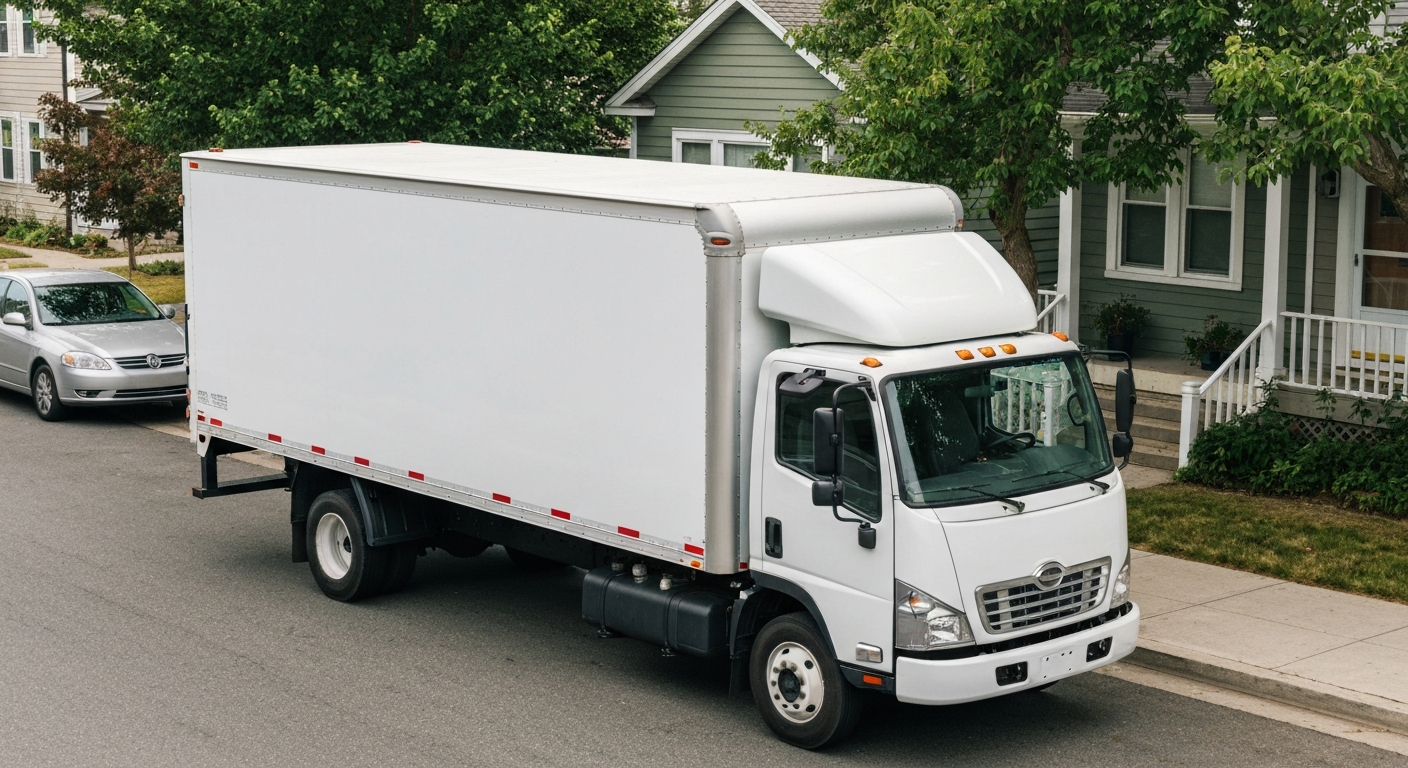
- Vehicle Type: Heavy trucks, box trucks, utility vans, and vehicles with specialized equipment (like ladder racks or toolboxes) typically require commercial coverage regardless of ownership.
- Primary Use: If you transport goods for hire, carry heavy tools and equipment to job sites, or have employees driving the vehicle, you need a commercial policy.
- Frequent Business Use: Even if the vehicle is personally owned, if it's regularly used for business errands, client visits, or carrying business inventory, a personal policy may not cover it.
Key Differences at a Glance
Personal Auto Policy
- Excludes vehicles used for business
- No coverage for employees as drivers
- Lower liability limits (typically up to $250K–$500K)
- No fleet discounts available
- No coverage for cargo or goods transported for hire
Commercial Auto Policy
- Designed specifically for business use
- Covers all listed drivers and employees
- Higher liability limits available ($1M+)
- Fleet discounts and telematics options
- Can include cargo, hired, and non-owned auto coverage
Higher Limits for Greater Protection
Commercial auto policies generally offer much higher liability limits than personal policies. While a personal policy might max out at $250,000 or $500,000, commercial policies frequently offer $1,000,000 limits or higher. This is crucial because business vehicles are often targeted in lawsuits following an accident, and standard personal limits are rarely enough to protect your business assets.
Consider this: a serious accident involving a commercial vehicle can easily generate damages exceeding $500,000 when you factor in medical bills, lost wages, pain and suffering, and property damage. If your personal policy only covers $100,000 per person and $300,000 per accident, you could be personally responsible for the difference — putting your home, savings, and business at risk. This is also why many businesses pair their commercial auto with a commercial umbrella policy for an extra layer of protection.
Common Mistakes Business Owners Make
Here are the most common pitfalls we see when reviewing business auto coverage:
- Assuming occasional business use is covered: Even using your personal vehicle for an occasional client visit or supply run can trigger the business-use exclusion.
- Not listing all drivers: If an employee drives a company vehicle and isn't listed on the policy, a claim could be denied or surcharged.
- Underestimating liability needs: NC's minimum limits ($30K/$60K/$25K) are nowhere near enough for a business. One serious accident could exhaust those limits in the first hour of a hospital stay.
- Forgetting about tools and equipment: Personal auto policies don't cover tools, equipment, or cargo inside the vehicle. You need a inland marine or cargo endorsement for that.
- Mixing personal and business vehicles on the same policy: This creates confusion at claim time and can result in coverage gaps for both.
What About Hired and Non-Owned Vehicles?
A common gap for growing businesses involves vehicles you don't own but use for business purposes — a rented van for a big delivery, or an employee's personal car used for a client errand.
Hired Auto coverage protects you when renting or leasing a vehicle for business. Non-Owned Auto coverage extends liability protection when employees use their personal vehicles for business tasks. Without these endorsements, your business could be on the hook for an accident your employee causes while running a work errand — even though their personal policy is the primary coverage. This is one of the most overlooked coverages in commercial auto insurance and one of the most important for any business with employees who drive.
How Much Does Commercial Auto Cost vs. Personal?
Commercial auto insurance typically costs more than personal auto insurance — but for good reason. The higher limits, broader coverage, and increased risk of business-use vehicles all factor into the premium. However, the cost of being uninsured or underinsured after a denied claim is almost always far higher.
Factors that affect your commercial auto premium include:
- Number of vehicles: Fleet policies often get better per-vehicle rates than insuring vehicles one at a time.
- Driver records: Clean MVRs across your team keep premiums lower.
- Vehicle type and GVWR: Heavier trucks and specialized equipment cost more to insure.
- Operating radius: Local routes cost less than regional or long-haul operations.
- Cargo type: Hauling hazardous or high-value materials increases risk and cost.
- Coverage limits and deductibles: Higher limits and lower deductibles increase premium but reduce out-of-pocket exposure.
The best way to manage cost is to work with an independent agency like TrueGuard that shops your coverage across 25+ commercial insurance carriers to find the most competitive rate for your specific operation. For a deeper look at cost-reduction strategies, read our guide on how to lower your auto insurance rates in North Carolina.
Why an Independent Agent Matters
One of the biggest advantages of working with an independent insurance agency like TrueGuard is that we aren't tied to a single carrier. When you need commercial auto coverage, we shop your policy across multiple top-rated insurance companies to find the most comprehensive coverage at the most competitive price.
We also understand the nuances between personal and commercial coverage — and can help you determine which policy type is right for your situation. If you operate a fleet, we can structure a fleet insurance program that scales as your business grows. If you're a sole proprietor who occasionally uses a personal vehicle for business, we can help you close that gap without overpaying for coverage you don't need. For contractor-specific guidance, see our guide on commercial auto insurance for Winston-Salem contractors.
Ensure Your Business Vehicles Are Properly Protected
Don't risk a denied claim. Contact TrueGuard Insurance today to review your current coverage and get a competitive commercial auto quote tailored to your business.

Matt Nelson
Founder, TrueGuard Insurance. Licensed professional specializing in commercial trucking, construction equipment, and dealer programs across multiple states.
Related Articles

Commercial Auto & Fleet Insurance Guide
Everything you need to know about insuring a fleet — from coverage types to cost-saving strategies.
Read Article
Understanding Your Auto Insurance Coverage Options
A complete breakdown of every auto insurance coverage type available to North Carolina drivers.
Read Article
How to Lower Your Auto Insurance Rates in NC
Practical strategies to reduce your auto insurance premiums without sacrificing essential coverage.
Read Article