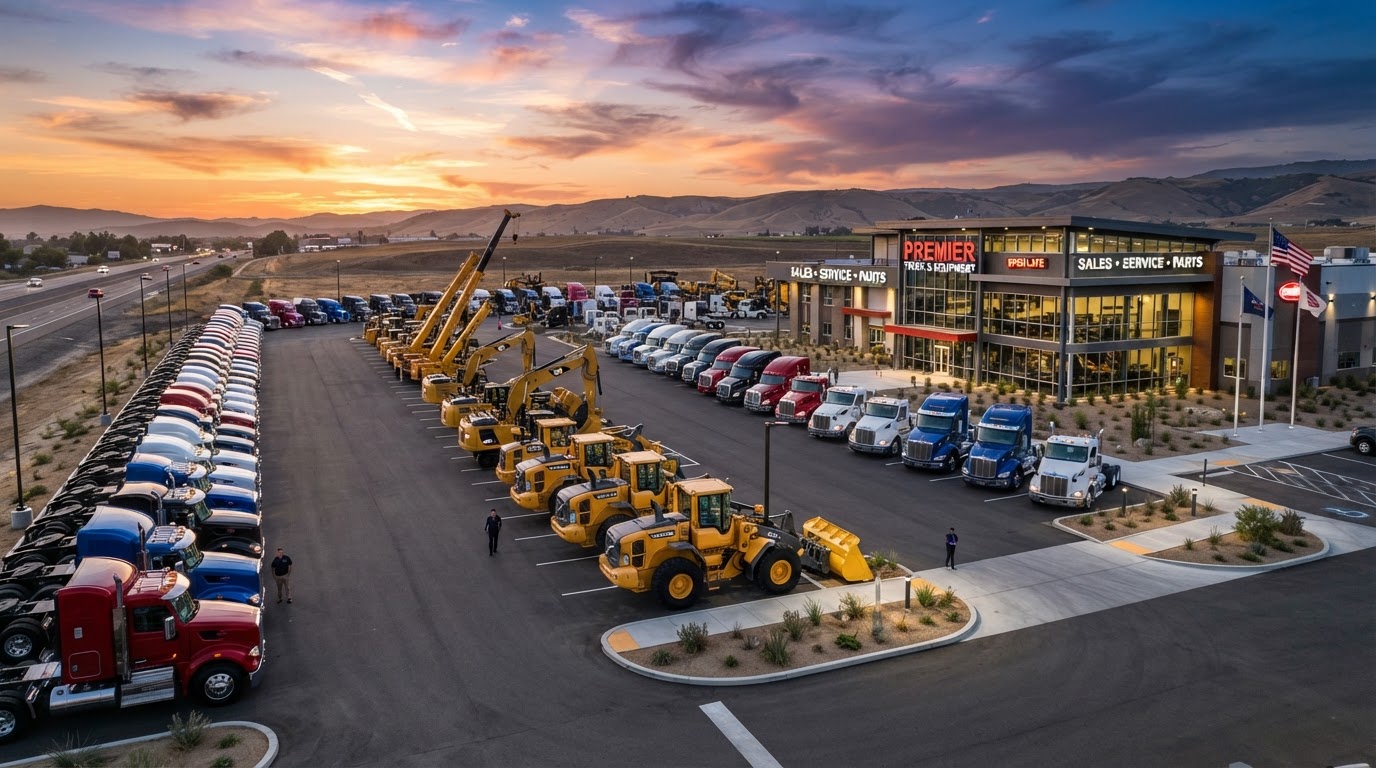
If you operate a truck dealership or heavy equipment lot, your inventory is likely your single largest asset — and it is also one of the most exposed. Vehicles and equipment sit outdoors, travel between auctions, move through transit, and are financed through floorplan lenders who require proof of physical damage coverage before they will release a dollar. A single hailstorm, a theft, or a fraudulent transaction can wipe out hundreds of thousands of dollars in value overnight.
Dealer floorplan insurance is the specialized coverage layer that stands between your dealership and that kind of loss. But not all dealer policies are built the same way. Generic lot policies often leave gaps in transit, false pretense, and catastrophic weather protection — gaps that dealers only discover after a claim is denied.
This guide breaks down everything you need to know about dealer floorplan and open lot insurance: what it covers, how the Daily Rate option can transform your cash flow, which endorsements actually matter, and how to structure a program that aligns with your real-world inventory flow rather than a static number on a declarations page.
What Is Dealer Floorplan Insurance?
Dealer floorplan insurance provides physical damage coverage for dealership inventory that is financed through a floorplan lending arrangement. When a dealer uses a floorplan lender to purchase vehicles or equipment for resale, the lender retains a financial interest in that inventory until it is sold. The lender requires proof that the inventory is insured against physical damage — theft, fire, collision, weather events — so that if a unit is destroyed before it is sold, the lender's collateral is protected.
Floorplan insurance satisfies that lender requirement while simultaneously protecting the dealer's equity in the inventory. Without it, a dealer whose lot is hit by a hailstorm or a theft could be left paying off floorplan loans on units that no longer exist — a scenario that has bankrupted dealerships that were underinsured or carried the wrong type of coverage.
The key distinction is that floorplan insurance is specifically structured for financed inventory. It is not a standard commercial property policy, and it is not a generic garage liability policy. It is a purpose-built program designed around the realities of how dealers acquire, hold, move, and sell inventory.
Floorplan vs. Open Lot Insurance: What Is the Difference?
These two terms are often used interchangeably, but they protect different segments of a dealership's inventory. Understanding the difference is critical because most dealers need both.
Floorplan Insurance
Covers inventory financed through a floorplan lender. The lender requires this coverage to protect their financial interest in the vehicles or equipment until they are sold.
- Covers financed inventory
- Satisfies lender compliance requirements
- Limits tied to floorplan capacity
Open Lot Insurance
Also known as Dealers Open Lot (DOL), this covers inventory the dealership owns outright — cash purchases, trade-ins, and units not tied to a floorplan financing agreement.
- Covers outright owned inventory
- Protects trade-ins and cash purchases
- Essential for independent dealers
Most dealerships carry a mix of financed and owned inventory. A franchise truck dealer may have 80% of their lot on floorplan and 20% owned outright through trade-ins. An independent dealer may have the opposite ratio. A properly structured program covers both segments seamlessly, so there is no gap when a unit transitions from floorplan to owned inventory (or vice versa) during a sale.
The Daily Rate Option: Pay Only for Your True Exposure
This is where the TrueGuard dealer program separates itself from generic lot policies. Traditional dealer insurance typically charges a fixed premium based on an estimated inventory limit. If you estimate $2 million in inventory and your actual inventory drops to $1 million during a slow season, you are still paying a premium based on $2 million. You are overpaying for coverage you are not using.
Pay Only for Your True Exposure
The Daily Rate plan calculates your premium based directly on your floorplan lender statement — day by day. You only pay for the exact units you carry, maximizing cash flow during low-inventory periods and eliminating the overpayment built into static limit policies.
The Daily Rate option works by pulling your actual daily inventory values from your floorplan lender statements. Instead of a fixed monthly premium, your premium fluctuates with your real exposure. When your lot is full, you pay for full coverage. When you sell down inventory and your exposure drops, your premium drops with it.
For dealers with seasonal inventory cycles, auction-driven purchasing patterns, or fluctuating floorplan utilization, this can represent a significant cash flow advantage. You are no longer subsidizing insurance for inventory that is not on your lot.
Who This Program Is Built For
The TrueGuard dealer floorplan and open lot program is designed specifically for dealerships that carry meaningful inventory exposure. This includes:
If you carry inventory exposure — on your lot, in transit, or under financing — this program is built for you. The coverage structure is designed to protect both your physical inventory and the financial structure tied to that inventory.
Key Coverages That Actually Matter
A robust dealer floorplan program goes far beyond basic physical damage. The TrueGuard program includes a suite of coverages that address the real-world risks dealers face every day. Here is what each one does and why it matters.
All-Risk Physical Damage Coverage
The foundation of the program is all-risk physical damage coverage, which protects inventory against a broad range of perils including theft, fire, collision, hail, wind, flood, vandalism, and other covered causes of loss. This is the core protection that satisfies lender requirements and safeguards the dealer's equity in the inventory.
False Pretense Coverage — $500,000 per Dealer Location
False pretense coverage protects the dealership if you are tricked or scammed out of a vehicle. Common scenarios include a buyer using a fraudulent cashier's check, a stolen identity to finance a purchase, or a dealer unknowingly purchasing a stolen vehicle at auction. Without this endorsement, the dealer absorbs the full loss. The TrueGuard program includes $500,000 per dealer location in false pretense protection.
Impending Damage, Economic Loss, and Spot Delivery Coverage
These three endorsements address scenarios that standard physical damage policies routinely exclude:
- Impending Damage covers the cost to move inventory to safety when a covered peril — like a hurricane or wildfire — is imminent but has not yet struck. If you need to relocate 30 trucks to a secure facility ahead of a storm, this coverage pays for that expense.
- Economic Loss protects against the loss of resale value after a vehicle is damaged and repaired. A truck that was in a collision and repaired may now carry a diminished value stigma. This coverage addresses that gap.
- Spot Delivery covers you if a customer drives off the lot before financing is fully approved and fails to return the vehicle or secure the loan. This is one of the most common — and most costly — loss scenarios for dealers.
Transit Coverage — $1,000,000 Limit
Inventory does not sit still. Units move between auctions, repair facilities, satellite lots, and delivery destinations. The TrueGuard program includes $1,000,000 in transit coverage, protecting inventory while it is in motion. This is critical because many generic policies exclude or severely limit transit exposure, leaving dealers uncovered during one of the highest-risk moments in the inventory lifecycle.
Property Temporarily Located Elsewhere — $1,000,000 Limit
Dealers regularly store inventory off-site — at auction facilities, repair shops, consignment lots, or secondary locations. The program includes $1,000,000 in coverage for property temporarily located away from the primary dealership, so your inventory remains protected regardless of where it physically sits.
Aggregate CAT Deductibles for Hail, Tornado, Wind, and Flood
Catastrophic weather events are the single biggest threat to dealer inventory. A single hailstorm can damage dozens of vehicles on a lot simultaneously. Without an aggregate CAT deductible, a dealer would pay a separate deductible for every single damaged unit — potentially hundreds of individual deductibles for one storm.
An aggregate CAT deductible caps your total out-of-pocket cost for the entire event. If a hailstorm damages 50 trucks, you pay one maximum aggregate deductible for the entire event rather than 50 individual deductibles. This can be the difference between a manageable claim and a financial catastrophe.
Pollution Due to Upset or Overturn — $10,000 Limit
If a covered vehicle or piece of equipment rolls over or crashes and spills fluids like diesel fuel, oil, or hydraulic fluid, this coverage pays for the hazardous material cleanup. The $10,000 limit addresses environmental cleanup costs that standard physical damage policies routinely exclude. This is particularly relevant for heavy equipment dealers whose inventory carries significant fluid capacities.
Bailment, Lease, and Consignment Equipment Coverage
Dealers who take in consignment equipment, lease units to customers, or hold equipment under bailment arrangements have unique exposure. The program includes coverage for bailed, leased, and consigned equipment, ensuring that inventory you are responsible for — but may not own outright — is protected.
Contingent Physical Damage for Leased or Rented Equipment
When a dealer leases or rents equipment to a customer and the customer's own insurance does not adequately cover the physical damage exposure, contingent physical damage coverage steps in. This protects the dealer's interest in equipment that is out in the field with a customer.
Claims Reimbursement at 100% for Parts and Labor
When a covered claim occurs, the program reimburses the dealer at 100% for both parts and labor — not a depreciated or discounted rate. This ensures that repairs to damaged inventory are fully funded, so the unit can be returned to saleable condition without the dealer absorbing a shortfall.
Common Losses This Program Protects Against
To understand why these coverages matter, it helps to look at the real-world loss scenarios that dealers face. These are not hypothetical risks — they are events that happen to dealerships every year across the country.
Why Generic Lot Policies Leave Dealers Exposed
Many dealers start with a generic garage liability or commercial property policy, assuming it will cover their inventory. It often does not — or it covers it inadequately. Here are the most common gaps:
No Transit Coverage
Generic policies frequently exclude inventory while in transit. If a truck is damaged during auction pickup or delivery, the dealer has no coverage.
No False Pretense Protection
A fraudulent buyer drives off with a truck and the cashier's check bounces. Without false pretense coverage, the dealer absorbs the full loss.
Per-Unit Deductibles on CAT Events
A hailstorm damages 40 units. Without an aggregate CAT deductible, the dealer pays 40 separate deductibles — potentially $200,000 or more out of pocket.
No Spot Delivery Coverage
A customer takes delivery before financing is approved and never returns. Without spot delivery coverage, the dealer is left with no vehicle and no payment.
Static Premiums That Do Not Reflect Real Exposure
The dealer pays a fixed premium based on an estimated inventory limit, even when actual inventory is far below that limit for months at a time.
How to Structure the Right Program for Your Dealership
The right floorplan and open lot program should be structured around your actual inventory flow — not a generic template. Here is how TrueGuard approaches it:
Analyze Your Inventory Mix
We review your floorplan utilization, owned inventory ratio, average unit values, and seasonal patterns to determine the right coverage limits and structure.
Align Coverage to Lender Requirements
Your floorplan lender has specific insurance requirements. We ensure the program satisfies those requirements precisely — including named insured status, loss payee provisions, and required limits.
Select the Right Premium Structure
For dealers with fluctuating inventory, the Daily Rate option often delivers significant savings. For dealers with stable, consistent inventory levels, a traditional fixed-limit structure may be more appropriate.
Layer in the Right Endorsements
Based on your operational risk profile, we add the endorsements that matter: false pretense, impending damage, economic loss, spot delivery, aggregate CAT deductibles, pollution, and contingent physical damage.
Ongoing Review and Adjustment
As your inventory mix, lender relationships, and operational flow evolve, we review and adjust the program to ensure coverage remains aligned with your actual exposure.
Frequently Asked Questions
What is dealer floorplan insurance?⌄
Dealer floorplan insurance provides physical damage coverage for dealership inventory that is financed through a floorplan lender. It protects against theft, fire, weather damage (hail, wind, flood), and collision, ensuring both the dealer and the lender are protected financially if inventory is damaged or destroyed.
What is the difference between floorplan and open lot insurance?⌄
Floorplan insurance covers inventory financed by a lender, while open lot insurance covers inventory owned outright by the dealership (such as trade-ins or cash purchases). Most dealers need a combination of both to fully protect their entire lot.
How does the Daily Rate option work?⌄
Instead of paying a fixed premium based on estimated inventory limits, the Daily Rate option calculates your premium based on your actual daily inventory levels pulled directly from your lender statements. You only pay for the exact exposure you have each day, which optimizes cash flow during low-inventory periods.
Does this cover inventory in transit or at auctions?⌄
Yes, comprehensive dealer floorplan programs typically include transit coverage and protection for inventory temporarily located elsewhere, such as at auctions, repair facilities, or during transport between lots. The TrueGuard program includes a $1,000,000 transit limit and $1,000,000 for property temporarily located elsewhere.
What is false pretense coverage?⌄
False pretense coverage protects the dealership if you are tricked or scammed out of a vehicle. For example, if someone purchases a truck using a fraudulent cashier's check or stolen identity, or if you unknowingly purchase a stolen vehicle, this endorsement provides coverage for the financial loss. The TrueGuard program includes $500,000 per dealer location.
What are aggregate CAT deductibles and why do they matter?⌄
Instead of paying a separate deductible for every single vehicle damaged in a catastrophic weather event, an aggregate CAT deductible caps your total out-of-pocket cost for the entire event. If a hailstorm damages 50 trucks on your lot, you pay one maximum aggregate deductible rather than 50 individual deductibles.
What is the AM Best rating of the carrier?⌄
The TrueGuard dealer floorplan program is placed through an AM Best Rated A+ XV admitted carrier. This is the highest rating tier in the insurance industry and provides dealers and lenders with confidence in the financial strength behind the coverage.
The Bottom Line for Dealers
Your inventory is your livelihood. A single uncovered loss event — a hailstorm, a fraudulent buyer, a transit accident — can erase months of profitability and jeopardize your floorplan lending relationship. Generic lot policies are not built for the realities of how dealers actually acquire, hold, move, and sell inventory.
The TrueGuard dealer floorplan and open lot program is structured differently. It is built around your real-world inventory flow, with the Daily Rate option to optimize premium, comprehensive endorsements for the losses that dealers actually experience, and an AM Best A+ XV admitted carrier behind every policy.
Whether you operate a franchise truck dealership, an independent lot, or a heavy equipment dealership, your floorplan insurance should match both your lender requirements and your real-world exposure. That is exactly what this program is designed to do.
